
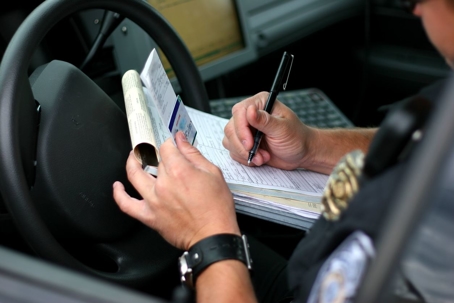
You probably did not look up NY speeding ticket statistics until a flashing light appeared in your rearview mirror. One minute you were trying to keep up with traffic, the next you were pulled over on the side of the road holding a yellow ticket and wondering what it would really mean. In that moment, it is easy to assume this is just a routine part of driving in New York that you should pay and forget.
In reality, your ticket is part of a much bigger picture. New York issues a very high volume of speeding tickets every year, concentrated in certain places, at certain speeds, and against certain types of drivers. Those patterns affect which drivers end up with points on their licenses, big fines, insurance hikes, and sometimes even suspensions. Understanding how your ticket fits into those trends can help you decide whether to fight it, negotiate it, or simply plead guilty.
At Martin A. Kron & Associates, P.C., our practice is led by a former New York State Traffic Court Judge, and we have spent more than 30 years focused on traffic violations in New York and New Jersey. We have handled thousands of speeding cases across NYC’s Traffic Violations Bureau and local courts throughout the state. In this guide, we use NY speeding ticket statistics and our day-to-day courtroom experience to show what is really happening on the roads, and what that means for your license and your future.
How Often Do Drivers Get Speeding Tickets in New York?
Speeding tickets are one of the most common charges New York drivers face. Each year, law enforcement in New York issues a very large number of speeding tickets across the state. Court calendars dedicated only to traffic matters are often packed, and on any given day, you will find long lines of drivers waiting to answer for alleged speeding violations. The numbers behind those calendars show that tickets are not rare events; they are a steady part of how New York enforces its traffic laws.
Statewide statistics generally show that speeding tickets make up a substantial share of all traffic tickets issued in a single year. A significant portion of all moving violations written in New York involve speed over the limit. Many of these tickets come from routine patrol stops on highways and local roads. Others stem from targeted enforcement in school zones and high-crash areas. When you see such a high volume of tickets in the data, it reflects a consistent focus by police and agencies on speed as a safety issue.
For you as a driver, these numbers have two sides. On one hand, they confirm that you are not alone and that many otherwise careful drivers receive speeding tickets at some point. On the other hand, the volume means the state records a large number of convictions and points each year. Every one of those entries represents a driver whose record and insurance may have changed as a result. At Martin A. Kron & Associates, P.C., we see this daily in court. Dockets often list dozens of speeding cases in a single session, and we have learned how those raw numbers translate into typical outcomes and risks for individual drivers.
Where NY Speeding Tickets Are Most Common
NY speeding ticket statistics show that tickets are not spread evenly across the map. Certain parts of New York consistently generate more speeding tickets than others. High population areas and heavily traveled corridors naturally see more enforcement. Drivers who commute through these areas or pass through on long trips are much more likely to find themselves in the data as one more speeding case.
New York City and its surrounding counties tend to account for a large share of speeding tickets, simply because of the dense traffic and constant movement. On major routes like the Long Island Expressway, the Cross Bronx Expressway, and sections of the Brooklyn Queens Expressway, there is a constant tension between congestion and sudden open stretches where drivers pick up speed. Outside the city, key interstates like I-87, I-84, I-90, and I-95 often show up in statistics as frequent locations for speeding stops, especially near busy exits and areas where the speed limit drops.
The local court structure also affects how and where tickets appear. In New York City, most non-criminal moving violations, including many speeding tickets, are handled at the Traffic Violations Bureau. This is an administrative system with its own rules and procedures. Elsewhere in the state, speeding tickets typically go to town, village, or city courts. NY speeding ticket statistics reflect these differences, with some smaller communities writing proportionally high numbers of tickets because they sit along major highways or near popular destinations.
We work in both NYC’s Traffic Violations Bureau and local courts throughout New York, so we see how geography shapes outcomes. A commuter who receives a speeding ticket in Queens faces a very different process than an out-of-state driver stopped on a rural stretch of the Thruway. The numbers might show similar ticket counts in both places, but our day-to-day experience tells us that local practice, court volume, and judge or hearing officer preferences can lead to very different results.
How Fast Over the Limit Drivers Are Ticketed in New York
Many drivers tell us they believe a few miles per hour over the limit would not matter. NY speeding ticket statistics suggest otherwise. While extremely high speed cases clearly draw enforcement attention, a large portion of tickets fall into mid-range speed bands. Officers often focus on drivers going roughly 11 to 20 miles per hour over the posted limit, especially on highways and multilane roads, because those speeds stand out from the general flow of traffic.
New York’s point system reflects these speed brackets. Relatively small amounts over the limit can result in 3 points. Tickets in the middle range, such as 11 to 20 miles per hour above the limit, can carry 4 or 6 points. Once the speed alleged rises into the highest brackets, such as 21 miles per hour or more over the limit, the points jump sharply. As a result, the bracket your speed falls into on the ticket matters just as much as the fact that you were allegedly speeding.
Statistics and court patterns often show that the middle brackets, especially 11 to 20 miles per hour over the limit, generate a high number of tickets. Drivers in these brackets frequently believed they were simply keeping up with traffic or taking advantage of a lighter stretch of road. School zones, work zones, and areas with sudden speed limit changes are particularly common sources of tickets in these ranges. In these locations, enforcement is often more aggressive, which shows up clearly in the data and in the volume of cases local courts see.
Because we handle thousands of speeding cases, we see patterns behind the raw numbers. Many clients come to us with tickets just inside a higher point bracket and want to know whether that speed is negotiable. In some courts, there is a long history of reducing high bracket speeds to lower brackets under the right circumstances. In others, especially at the Traffic Violations Bureau, reductions are much harder to obtain, and each mile over the limit recorded on the ticket becomes more critical. Understanding where your alleged speed fits statistically and legally helps us decide the best way to approach your case.
What NY Speeding Ticket Statistics Reveal About Risk to Your License
Raw ticket counts only tell part of the story. The real question for most drivers is how likely those tickets are to lead to points, suspensions, and long-term costs. NY speeding ticket statistics include not only the number of tickets issued, but also the number of convictions and DMV actions taken against drivers who accumulate too many points. The more tickets written in a given bracket or area, the more drivers you will see in the data with serious record issues.
New York uses a point system to track moving violations. Speeding convictions add points to your record based on how fast you were going over the limit. If you reach certain thresholds within 18 months, you can face driver responsibility assessments, possible license suspensions, and other consequences. For example, when a driver’s total points reach higher levels within that time frame, that driver is entering territory where the DMV may take action, and where any new ticket becomes much more dangerous.
Statistically, a noticeable group of drivers each year reach these higher point levels because of multiple speeding tickets. A driver might receive one ticket early in the year on a highway, another a few months later on a local road, and a third on a holiday weekend. Each one might have felt minor in the moment, but together they show up in NY speeding ticket statistics as repeat violations leading to higher risk categories. These are the drivers who often end up facing DMV notices and insurance premium increases.
In our practice, we routinely meet drivers at this stage, when they realize the problem is no longer a single ticket but the total pattern on their record. Because we have handled thousands of such cases, we can look at your existing points, the new speeding charge, and the court or agency involved, and give a realistic view of what could happen if you simply plead guilty. That understanding, informed by both statistics and courtroom history, lets us help you decide whether to challenge the ticket, seek a reduction, or pursue another strategy to protect your license.
Enforcement Trends: Cameras, Safety Campaigns & Police Crackdowns
NY speeding ticket statistics over time show that enforcement tools and campaigns change not only how many tickets are issued, but also who receives them. Traditional police stops remain a major source of tickets, but automated enforcement and targeted safety initiatives have had a clear impact on where and when drivers are most likely to be cited. These shifts matter if you regularly drive through school zones, busy corridors, or high-crash areas.
Expanded use of speed cameras, especially in school zones, has led to noticeable spikes in ticket counts in those locations. Camera-based tickets are often issued when a vehicle exceeds the posted limit by a set threshold during certain hours. In statistics, you may see sharp increases in tickets around the times and places where cameras operate. While many of these camera tickets carry different rules and, in some cases, do not add points the same way officer-initiated tickets do, they still create financial and legal consequences that drivers need to understand.
Seasonal and targeted enforcement campaigns also influence NY speeding ticket statistics. Around major holidays, special events, or during certain safety initiatives, agencies announce crackdowns on speeding, impaired driving, or aggressive driving. These campaigns often focus on particular highways or corridors and are reflected in temporary increases in ticket volume in the affected areas. Drivers who pass through these zones during a campaign are statistically more likely to be stopped than at other times.
At Martin A. Kron & Associates, P.C., we pay attention to these enforcement trends because they shape the kinds of cases we see and the strategies that tend to work. For example, a driver cited by an officer during a widely publicized crackdown on a dangerous curve may face different attitudes in court than a driver cited on an uneventful weekday on a straight stretch of highway. Camera tickets can also require a different response than traditional speeding charges. Understanding how these trends show up in NY speeding ticket statistics lets us give more precise advice based on when, where, and how your ticket was issued.
Common Myths About NY Speeding Tickets That Statistics Disprove
Many drivers approach their first or second speeding ticket with assumptions that feel reasonable but do not match what actually happens across thousands of cases. NY speeding ticket statistics, along with what we see in court, offer a reality check on some of the most common beliefs. Clearing up these myths can help you avoid decisions that seem convenient in the short term but are costly in the long run.
One widespread belief is that because so many people speed, courts are lenient and most tickets quietly disappear. In fact, conviction data shows that a large portion of speeding tickets result in at least some penalty. While some drivers receive reductions or dismissals, many end up with points and fines that stay on their record. Judges, hearing officers, and prosecutors see the same statistics you do about speed-related crashes and enforcement, and that influences how seriously they treat these cases.
Another myth is that out-of-state drivers can ignore NY speeding tickets without real consequences. Many states share driver information, and New York reports certain violations to other jurisdictions. When you look at statistics on drivers with suspended or problem licenses, out-of-state names appear regularly. Failing to respond to a New York speeding ticket can lead to a suspension in New York that may then affect your license back home.
A third common belief is that paying the fine ends the issue. In reality, the data on points and repeat violations shows that pleading guilty often starts a chain of events. Once the conviction posts, your point total changes, and your record begins to show a pattern. Future tickets are then judged against that background. We regularly see drivers who treated the first ticket as a simple bill to pay, only to discover at the second or third ticket that they have crossed a threshold where the DMV is now taking a much closer look at their record.
In our experience, most drivers do not hold these myths out of carelessness. They are simply reacting to a complex system with limited information. NY speeding ticket statistics demonstrate how often these assumptions lead to avoidable problems. By looking at your ticket through the lens of actual trends and legal practice, we can help you avoid repeating the same patterns that push so many drivers into higher risk categories.
How We Use NY Speeding Ticket Trends to Build a Strategy
Statistics alone do not decide your case, but they give an important backdrop for making smart choices. When you contact us about a speeding ticket, we do not just look at the ticket in isolation. We look at where you were cited, how fast you were alleged to be going, what your current driving record looks like, and which court or agency will hear the case. All of those factors connect directly to the patterns reflected in NY speeding ticket statistics.
For example, a driver with a clean record who receives a mid-range speeding ticket in a small town court may have more options for negotiated reductions than a driver with several prior tickets facing a high-speed allegation in NYC’s Traffic Violations Bureau. Over decades of practice, we have seen how different courts tend to handle similar cases. Some venues have a long history of considering reductions to lower speed brackets or non-speeding offenses. Others rarely offer such outcomes. Knowing those tendencies, which are often visible in local conviction data, helps us advise you realistically from the outset.
We also consider broader enforcement trends when planning a strategy. A ticket written as part of a concentrated safety campaign may be harder to soften because those campaigns often come with pressure on officers and courts to send a strong message. A ticket from a routine stop on a stretch of road known for high ticket volume might be approached differently. Our familiarity with these patterns across thousands of cases helps us spot where the statistics suggest room for flexibility, and where we should instead focus on contesting the officer’s observations or other aspects of the case.
At Martin A. Kron & Associates, P.C., our leadership under a former New York State Traffic Court Judge gives us a view from both sides of the bench. We understand how high-volume speeding enforcement looks to the courts and how individual cases blend into that bigger picture. When you call us, we bring that experience to your side. We review how your specific ticket fits into the statewide and local trends, then walk through your options in clear terms so you can decide how to move forward.
Talk With Us About Where Your Ticket Fits Into NY Speeding Trends
NY speeding ticket statistics make one thing clear. Speed enforcement in New York is steady, widespread, and backed by a point system that can turn a few quick decisions behind the wheel into long-term problems for your license and your wallet. Your ticket is one entry in that larger data set, but for you, it is far more personal. It affects your ability to drive to work, care for family, and keep insurance costs in check.
You do not have to guess how your ticket fits into the trends we have discussed or what is realistic in your court. At Martin A. Kron & Associates, P.C., we review speeding tickets every day, looking at the location, speed alleged, prior record, and enforcement patterns behind each case. We then give honest, straightforward advice about your options and what each choice could mean. If you want a clear view of your situation before you decide what to do next, we invite you to contact us for a free consultation or call us at (212) 235-1525.